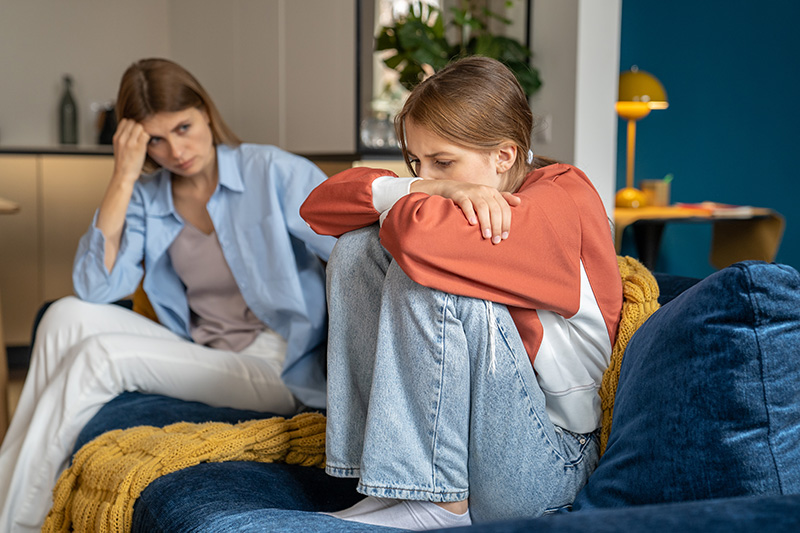
As children grow, they are learning how to handle emotions, relationships, and power. Sometimes, this can show up in ways that feel difficult, harmful, or unsafe at home, with siblings, or in relationships.
If you are worried about your child’s behaviour, or how they are treating others in your family, it can feel confusing or even frightening. These are not easy things to face.
You are not alone. Many parents go through this, and support is available to help you understand what is happening and what to do next.
This page covers six themes. You can read through all of them or go straight to what you need:
What is domestic abuse?
Domestic abuse is when someone’s behaviour in a relationship or family makes another person feel unsafe, controlled, or hurt. It often happens as a pattern over time. Not just a one-off situation and it is not always physical.
Children and young people can be affected by domestic abuse in different ways. They may witness it at home, experience it themselves, or begin to replicate patterns they have seen, especially if they have not had support to understand healthy relationships.
What might it look like?
- Controlling where someone goes or who they see
- Putting someone down, humiliating them, or making them feel worthless
- Threats, intimidation, or creating fear
- Physical harm
- Making someone feel like they have to walk on eggshells
- Financial control, managing or withholding money
- Monitoring someone’s phone, messages, or movements
Understanding the impact
Children and young people who witness or experience domestic abuse may be affected in ways that are not always obvious. It can shape how they understand relationships, conflict, and power. Over time, some young people may begin to repeat these patterns themselves, especially without support.
This is not inevitable. With the right conversations and support, young people can learn to recognise unhealthy relationship patterns and build respectful, equal relationships of their own.
If you are experiencing domestic abuse, this is not your fault. It can be very difficult to talk about, and you might feel unsure what to do. You do not have to have it all figured out before you reach out for support.
What you can do
Focus on safety first
Your safety, and the safety of your children, is the priority. If you are in an unsafe situation, contact the Live Fear Free Helpline. They can help you think through your options, make a safety plan, and access support when you are ready. You do not have to leave or make any decisions immediately.
Live Fear Free Helpline (Wales) – call 0808 80 10 800 (24 hours, 7 days a week), text 07860 077333, or email info@livefearfreehelpline.wales.
Reach out to someone you trust
Talking to someone. A friend, family member, GP, or support service, can help you feel less alone and think through what to do next. You do not have to explain everything at once.
Supporting your child
Children do not need all the details, but they do need reassurance. You might:
- Let them know that what is happening is not their fault
- Give them space to talk about how they are feeling
- Keep explanations simple and age-appropriate
- Help them understand that they are loved and safe
Visit our Preventing Unhealthy Relationships page for ideas to help children understand what healthy relationships look like and how to support them as they grow.
Links & Resources
All helplines and organisations listed below are free and confidential. You do not need to give your name or any identifying information.
If you need help now
- Live Fear Free Helpline (Wales) – 0808 80 10 800 · 24 hours, 7 days a week · text 07860 077333 · email info@livefearfreehelpline.wales
- NSPCC Helpline (for parents and carers) – 0808 800 5000
- If someone is in immediate danger, call 999
For parents and carers
- NSPCC — Talking to your child about domestic abuse – guidance on age-appropriate conversations
- Women’s Aid — Understanding domestic abuse – signs, support, and safety planning
- NHS — Getting help for domestic violence – information and where to seek help
- Childline — Growing up with domestic abuse (video) – a short film for young people growing up with domestic abuse
For young people
- Childline – free, confidential support up to age 19. Call 0800 1111, chat online, or email without giving your name
- The Mix – for young people aged 13-25. Call 0808 808 4994 or text THEMIX to 85258
- Meic Cymru – confidential helpline, webchat and text support for young people in Wales
Visit our Get Support page for local and national organisations that can help you and your child.
Child to parent violence (CPV) is when a child or young person’s behaviour makes a parent or carer feel unsafe, controlled, or hurt. It can happen in moments of overwhelm, or develop into a pattern over time.
We have a full page covering what CPV is, what it looks like, the cycle families often recognise, how to stay safe in the moment, and how to seek the right support.
Read our full guidance on child to parent violence, including links and resources, on the following page:
What is sibling abuse?
Sibling abuse is when a child or young person behaves in a way that repeatedly harms, controls, or frightens a brother or sister. It is different from normal sibling conflict and that difference matters, because almost all siblings argue, fall out, and say unkind things to each other at times.
Sibling sexual abuse is any sexual behaviour between siblings where there is a misuse of power. ‘Siblings’ includes children who share one or both parents, as well as those who have grown up together in the same family home.
Normal conflict versus something more serious
Normal sibling conflict tends to be mutual, both children are sometimes the aggressor, both sometimes the one who feels wronged. It flares up and settles. Both children can recover from it and move on. Neither child lives in fear of the other.
Sibling abuse looks different. You might notice:
- One child is always the target. It is never really the other way around
- The child on the receiving end seems genuinely frightened, not just annoyed or upset
- They change their behaviour to avoid the other child. Staying in their room, not coming downstairs, refusing to be alone with them
- The behaviour keeps happening even after you have addressed it
- The child on the receiving end seems unable to make it stop, no matter what they do
To give a concrete example: if your children argue over the TV remote, say something hurtful in the heat of the moment, and then make up, that is normal conflict. If one child consistently targets the other with put-downs, physical aggression, or intimidation, the other child seems scared or is changing how they live their life to avoid them, and it keeps repeating, that is worth taking seriously.
If you are unsure, trust your instincts. You know your children. If something feels more serious than ordinary sibling rivalry, if one child seems genuinely afraid, or if the behaviour involves anything sexual, seek support.
What might it look like?
- Repeated bullying, intimidation, or threats
- Physical harm, such as hitting, kicking, pushing
- Controlling or dominating behaviour
- Consistent humiliation, name-calling, or putting a sibling down
- Unwanted sexual behaviour towards a sibling
- Isolating a sibling or turning others against them
Understanding the impact
Sibling abuse can have immediate and lasting effects on the child being harmed, including anxiety, withdrawal, changes in behaviour at school, and difficulty trusting others.
For the child displaying these behaviours, without support these patterns can continue into other relationships. How young people treat their siblings often shapes how they understand boundaries, power, and respect more broadly.
It is also important to acknowledge the impact on you as a parent. Feeling caught between children, unsure who to believe, or frightened of what is happening is exhausting and isolating. You do not have to manage this alone.
What you can do
Make sure all children are safe
If the behaviour is causing physical harm or serious fear, prioritise separating the children and creating safe spaces for each of them. This might mean different bedtimes, rooms, or supervised time together while you seek support.
Speak to each child separately
Talk to each child separately. Focus on safety, feelings, and what happened, rather than taking sides or assigning blame. Be clear that the behaviour is not acceptable, while remaining open to understanding what is driving it.
Take it seriously
Trust your instincts. If one child seems afraid, if the behaviour is escalating, or if it involves sexual behaviour, take it seriously and seek support.
Seek specialist support
Sibling abuse can be complex to navigate, especially where there are other factors involved such as trauma, additional needs, or patterns learned from what children have witnessed at home. Specialist support can help you understand what is happening and what to do next.
Visit our Preventing Unhealthy Relationships page for ideas on supporting your child to recognise boundaries and learn safer ways of relating to others.
Links & Resources
All helplines and organisations listed below are free and confidential. You do not need to give your name or any identifying information.
If you need help now
- Live Fear Free Helpline (Wales) – 0808 80 10 800 · 24 hours, 7 days a week · text 07860 077333 · email info@livefearfreehelpline.wales
- NSPCC Helpline (for parents and carers) – 0808 800 5000
- If someone is in immediate danger, call 999
For parents and carers
- NSPCC — Sibling abuse – what it is and how to get help
- Stop It Now – 0808 1000 900 – if the behaviour involves sexual harm between siblings
For young people
- Childline – free, confidential support up to age 19. Call 0800 1111, chat online, or email without giving your name
- The Mix – for young people aged 13-25. Call 0808 808 4994 or text THEMIX to 85258
- Meic Cymru – confidential helpline, webchat and text for young people in Wales
Visit our Get Support page for local and national organisations that can help you and your child.
What is coercive control?
Coercive control is when someone uses a pattern of behaviour over time to control, isolate, or frighten another person. It is a criminal offence. It can happen in a current relationship or continue and sometimes intensify, after a relationship has ended.
In a family context, this most often means a parent experiencing coercive control from a partner or ex-partner. Sometimes a former partner continues to exercise control through the children, using them to monitor, manipulate, or maintain power over the other parent even after separation.
Below we have a full section covering what coercive control looks like in this context, how it affects children, how to protect children from being used as go-betweens, and how to talk to your child about it.
If you are worried about coercive control in your child’s own romantic relationship or friendships, whether they are experiencing it or displaying these behaviours, this is covered in our Relationships and Dating section.
What might it look like?
Coercive control from a partner or ex can include:
- Controlling decisions about money, friendships, work, or daily life
- Monitoring movements, messages, or phone use
- Jealous or possessive behaviour framed as love or concern
- Threats, humiliation, or putting you down in front of others including children
- Isolating you from friends, family, or support
- Making you feel responsible for their emotions or behaviour
- Using legal proceedings, housing, or finances as tools of control
When an ex-partner uses children to maintain control, it might look like:
- Asking children to report back on what you do, who you see, or what you say
- Sending messages or making demands through the children rather than directly
- Using contact arrangements to create unpredictability, fear, or conflict
- Undermining your relationship with your children, criticising you in front of them or encouraging them to take sides
- Threatening to take or withhold children to gain compliance
- Manipulating children’s emotions to increase your distress
Understanding the impact
Coercive control can leave parents feeling exhausted, isolated, confused, and unsure whether what they are experiencing is ‘bad enough’ to seek help. It can affect your confidence, your sense of reality, and your ability to make decisions.
Children are also affected, even when they are not the direct target. Witnessing a parent being controlled, undermined, or frightened shapes how they understand relationships and power. Being used as a go-between or asked to monitor a parent puts children in an impossible position, one they should never be placed in.
Children may show signs of distress, divided loyalty, anxiety, or changes in behaviour, particularly around contact arrangements. They may say things that don’t sound like them, or seem confused about what they’re allowed to say or feel.
With the right support, parents and children can rebuild safety, trust, and a sense of stability. You do not have to accept this as normal, and you do not have to manage it alone.
What you can do
Focus on your own safety first
If you are experiencing coercive control, your safety and your children’s safety is the priority. Specialist services can help you think through your options, make a safety plan, and access support at whatever pace feels right. You do not have to leave or make any decisions immediately.
Live Fear Free Helpline (Wales) – 0808 80 10 800 · 24 hours, 7 days a week – also text 07860 077333 or email info@livefearfreehelpline.wales.
If an ex is using children to control you
This is a recognised form of coercive control and you don’t have to accept it. Some steps that can help:
- Keep a record of incidents – dates, what was said or done, and any impact on the children. This may be useful for legal proceedings or professional support
- Communicate with your ex in writing where possible, so there is a clear record
- Seek legal advice on contact arrangements if these are being used as a tool of control. A solicitor or family law organisation can advise on your options
- Talk to your children’s school if you are concerned about what children are being told or asked to do
Rights of Women — family law legal advice – free legal advice line for women on family law matters including contact and coercive control.
Protect children from being in the middle
Children should never be put in the position of carrying messages, reporting on a parent, or feeling responsible for managing adult conflict. Where an ex is doing this, you can take some steps to reduce the impact on your children:
- Be consistent and calm in how you talk about the situation. Children pick up on adult distress
- Avoid asking children what has been said or done at the other parent’s home
- Make clear to children that they are not responsible for adult relationships or decisions
- Reassure children that they are allowed to love both parents
- Seek support for your children if they seem distressed, confused, or caught in the middle
Talking to your child
Talking to children about coercive control requires care. Children need to feel safe and loved, not recruited into adult conflict.
You might:
- Keep explanations simple and age-appropriate. Children don’t need adult detail
- Name what they can see without placing blame: ‘I know things have felt difficult at home. That’s not your fault.’
- Validate their feelings without pulling them towards your side: ‘It’s okay to feel confused or upset about this.’
- Make clear they are loved by you and that your relationship with them will not change
- Give them language for their feelings and let them know they can always come to you
If your child is asking difficult questions – about why you separated, what their other parent has done, or why things are the way they are – it is okay to say: ‘That’s something for adults to sort out. It’s not your job to worry about it. My job is to look after you.’
Specialist support, including family therapy or children’s counselling, can help children process what they are experiencing in a safe, neutral space.
Links & Resources
If you need help now
- Live Fear Free Helpline (Wales) – 0808 80 10 800 · 24 hours, 7 days a week · text 07860 077333 · email info@livefearfreehelpline.wales
- National Domestic Abuse Helpline – 0808 2000 247 · 24 hours, 7 days a week
- Respect Phoneline – 0808 802 4040 – if you are worried about your own controlling behaviour
- If someone is in immediate danger, call 999
For parents experiencing coercive control
- Live Fear Free (Wales) – 0808 80 10 800 · 24 hours, 7 days a week
- Women’s Aid — Coercive control – what it is and how to get support
- Women’s Aid — The Survivors Handbook – guidance on post-separation abuse and children
- Rights of Women — family law legal advice – free legal advice line for women
- Welsh Government — This Is Not Ok – information and resources on coercive control in Wales
- Respect Phoneline – 0808 802 4040 – if you are concerned about your own behaviour
For young people
- Childline – free, confidential support up to age 19. Call 0800 1111, chat online, or email without giving your name
- The Mix – for young people aged 13-25. Call 0808 808 4994 or text THEMIX to 85258
- Meic Cymru – confidential helpline, webchat and text for young people in Wales
Visit our Get Support page for local and national organisations that can help you and your child.
What is sexual abuse?
Sexual abuse is when someone involves a child or young person in sexual activity that they do not fully understand, cannot consent to, or that is harmful to them.
Sexual abuse can be carried out by adults, but it can also happen between young people. Sometimes a child or young person may display sexual behaviours that are harmful to others. This is covered in more detail on our Harmful Sexual Behaviour page.
If you have discovered that your child has been abused, or may have behaved in a way that has harmed someone else, it is natural to feel overwhelmed, shocked, or unsure what to do. This is not your fault. Reaching out for support is a brave and important step.
What might it look like?
- Unwanted touching or sexual contact
- Pressuring or forcing someone into sexual activity
- Sharing sexual images without consent
- Sexual behaviour that causes distress, fear, or harm
- A child showing sexual knowledge or behaviour beyond what is expected for their age
- Changes in behaviour, withdrawal, anxiety, sleep problems, or reluctance to be with certain people
Understanding the impact
Sexual abuse can affect a child’s sense of safety, trust, self-worth, and understanding of relationships. The impact can be immediate or emerge over time, and it looks different for every child.
Some children who have experienced sexual abuse may go on to display harmful sexual behaviour themselves, not because this is inevitable, but because they have experienced something they have not been able to make sense of. Early support makes a real difference.
For parents, discovering that a child has been abused, or has abused others, can be deeply painful and disorienting. Seeking support for yourself, alongside your child, is important.
What you can do
Stay calm and steady
Your first response matters enormously. If your child discloses abuse, try to stay calm, even if you feel shocked or distressed. Thank them for telling you, reassure them it is not their fault, and let them know you are going to get help.
Do not investigate yourself
It is important not to question your child repeatedly or in detail about what happened. Even well-intentioned questions can cause additional distress and may affect any formal process that follows. You do not need to gather information or understand the full picture before seeking help, that is the role of specialist services.
Contact the NSPCC helpline or your local children’s services first, and let them guide the next steps. They are experienced in supporting families through this and will take things at the right pace.
Lucy Faithfull Foundation — Child sexual abuse investigations: A guide for parents and carers is a practical, Welsh Government-commissioned guide explaining what happens during an investigation and how to support your child through it.
Seek specialist support immediately
Sexual abuse requires specialist support. You can contact the NSPCC, your local children’s services, or We Stand (Wales) – all of whom can advise you on next steps and connect you with the right help for your child and your family.
Stop It Now – 0808 1000 900 – offer free, confidential advice if you are worried about a child’s sexual behaviour. You do not need to give names or identifying details.
The Lucy Faithfull Foundation traffic light tool
If you are trying to understand whether your child’s sexual behaviour is concerning or within the range of what is developmentally expected, the Lucy Faithfull Foundation’s traffic light system maps behaviour against typical development across different age groups.
Lucy Faithfull Foundation — Understanding sexual behaviour in young people.
Links & Resources
All helplines and organisations listed below are free and confidential. You do not need to give your name or any identifying information.
If you need help now
- Stop It Now Helpline (free and confidential) – 0808 1000 900 · live chat and email also available
- NSPCC Helpline (for parents and carers) – 0808 800 5000
- Live Fear Free Helpline (Wales) – 0808 80 10 800 · 24 hours, 7 days a week
- If someone is in immediate danger, call 999
For parents and carers
- Lucy Faithfull Foundation — Child sexual abuse investigations: A guide for parents and carers – Welsh Government-commissioned guide ‘what happens during an investigation and how to support your child’
- We Stand (Wales) – specialist support for families affected by child sexual abuse in Wales
- Stop It Now – 0808 1000 900 – confidential advice for families
- Lucy Faithfull Foundation — Understanding sexual behaviour in young people – traffic light tool mapping behaviour against typical development
- NSPCC — Child sexual abuse – information and support for families
For young people
- Childline – free, confidential support up to age 19. Call 0800 1111, chat online, or email without giving your name
- The Mix – for young people aged 13-25. Call 0808 808 4994 or text THEMIX to 85258
- Meic Cymru – confidential helpline, webchat and text support for young people in Wales
Visit our Get Support page for local and national organisations that can help you and your child.
What is honour-based violence?
Honour-based violence (HBV) is when someone is harmed, controlled, or put under pressure because others believe it protects the reputation or ‘honour’ of a family or community.
It can take many forms, emotional pressure, threats, physical harm, restrictions on freedom, or forced marriage. It is often rooted in beliefs about gender, behaviour, relationships, or identity, and may involve wider family members or community networks, not just those in the home.
HBV is a serious safeguarding concern and a criminal offence. It is not acceptable in any cultural or community context.
This page is written for parents and carers. Whether you are concerned about a child who may be experiencing HBV, worried about attitudes or behaviours within your wider family or community, or trying to understand something your child has told you. As with all sections of this site, some of what is described here may be happening within a family rather than outside it.
Sometimes young people themselves may feel pressure to control or monitor others based on these beliefs, including siblings or peers. This too is a form of honour-based violence.
What might it look like?
- Pressure to follow strict rules about behaviour, relationships, or identity
- Being monitored, restricted, or having limited freedom, for example, who someone can see or speak to
- Strong expectations about gender roles, modesty, or family reputation
- Threats, punishment, or shame linked to bringing dishonour
- Forced or pressured marriage
- A young person trying to control or monitor a sibling’s or peer’s behaviour based on family expectations
- A child being taken out of school, isolated, or removed from their home
Understanding the impact
HBV can be complex and sensitive to address, particularly where it involves deeply held cultural or community beliefs. Young people affected may feel torn between different expectations. Family and culture on one side, their own identity and choices on the other. This can create real fear, confusion, and pressure.
The impact can include restricted freedom, emotional distress, physical harm, and in serious cases, significant risk to safety. Young people in these situations often feel they have no one to turn to, or that speaking out would cause more harm.
It is important to know that there is specialist support available from people who understand these issues deeply and can help safely and confidentially, without putting anyone at greater risk.
If you are seeking feedback or support from people with lived experience of HBV, Karma Nirvana can connect you with appropriate community resources and peer support.
What you can do
Prioritise safety
If you believe a child or young person is at immediate risk, contact the police or Live Fear Free Helpline. HBV situations can escalate quickly, and specialist organisations can help you assess risk and respond safely.
Seek specialist advice before acting
In HBV situations, it is important to seek specialist advice before approaching family members or the community as this can sometimes increase risk. Specialist services can advise on safe approaches and next steps.
Create space for open conversation where safe
Where it is safe to do so, let your child know you are there for them, that they are not alone, and that they have the right to make choices about their own life. Keep your tone calm and non-judgemental.
Focus on respect, safety, and choice
If your child is applying pressure to others based on ideas about honour or gender roles. Conversations about respect, safety, and every person’s right to make their own choices within the law are important. Specialist services can support these conversations.
Karma Nirvana – 0800 5999 247 – specialist support for those affected by honour-based abuse and forced marriage.
Links & Resources
All helplines and organisations listed below are free and confidential. You do not need to give your name or any identifying information.
If you need help now
- Live Fear Free Helpline (Wales) – 0808 80 10 800 · 24 hours, 7 days a week · text 07860 077333 · email info@livefearfreehelpline.wales
- Karma Nirvana – 0800 5999 247 – specialist support for honour-based abuse and forced marriage
- Forced Marriage Unit – 020 7008 0151 – Monday to Friday 9am-5pm
- NSPCC Helpline (for parents and carers) – 0808 800 5000
- If someone is in immediate danger, call 999
For parents and carers
- Karma Nirvana – specialist support for honour-based abuse and forced marriage – 0800 5999 247
- uk — Forced Marriage Unit – government guidance and support for those affected by or at risk of forced marriage
- Live Fear Free (Wales) – 0808 80 10 800 · 24 hours, 7 days a week
- NSPCC — Honour-based abuse – signs, impact, and support for families
For young people
- Childline – free, confidential support up to age 19. Call 0800 1111, chat online, or email without giving your name
- The Mix – for young people aged 13-25. Call 0808 808 4994 or text THEMIX to 85258
- Karma Nirvana – confidential support for young people affected by honour-based abuse or forced marriage – 0800 5999 247
- Meic Cymru – confidential helpline, webchat and text support for young people in Wales